

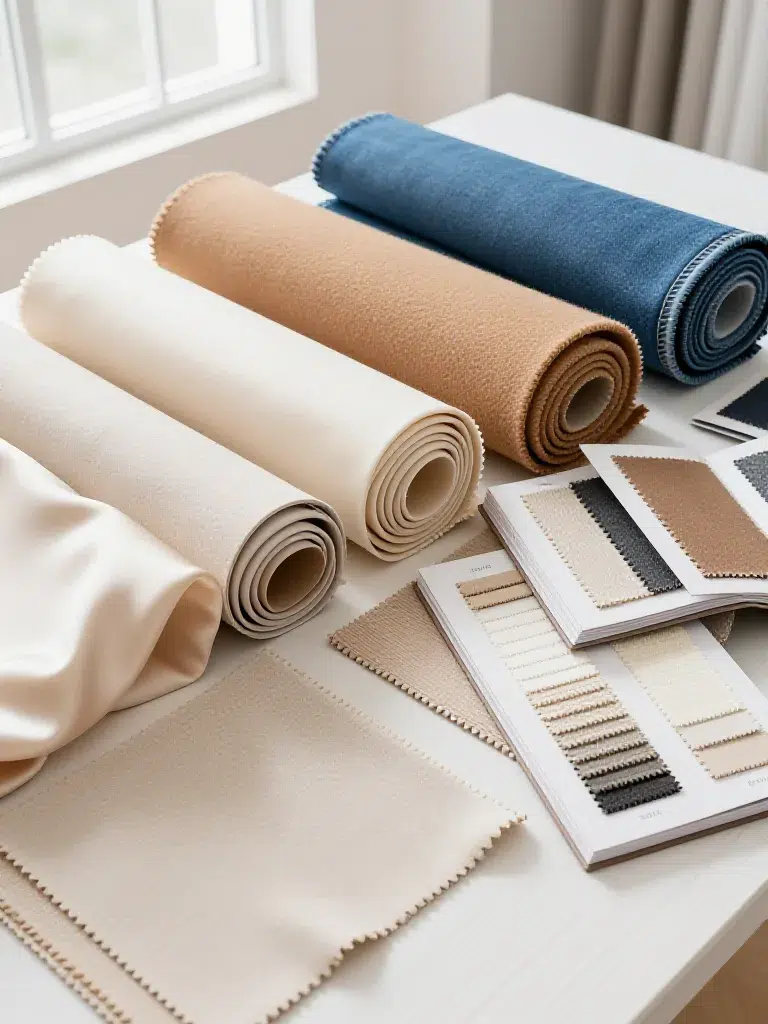
Why Fabric Is Suddenly a Compliance Issue — and a Cost Opportunity
Since July 19, 2026, large companies selling into the European Union have been prohibited from destroying unsold clothing, footwear and accessories, under the EU’s Ecodesign for Sustainable Products Regulation (Regulation (EU) 2024/1781). Industry analysis from JD Supra and Reuters this summer spelled out the consequence for brands: garments must now be designed for durability and recyclability, fibers should hold their value beyond one season, and overproduction is no longer something you can quietly write off. At the same time, cotton markets are offering a rare window of predictability — global output is forecast at 26.2 million tonnes in 2026-27, just above consumption, according to a September 2026 Fibre2Fashion outlook.
Put those two signals together and one conclusion follows: the fabric you choose is now the most consequential decision in your entire collection — for regulatory risk, for margin, and for how customers experience your brand. At 3Nice Clothing, we manufacture jackets, dresses, denim, knitwear, tops and skirts for emerging fashion labels across the United States, Europe and Australia. In almost every collection we produce, the fabric conversation is where the garment is won or lost. Here is what designers should know before they source.
Your Fabric Choice Sets Up to 70% of Your Product Cost
Fabric is the largest single line in any garment’s cost — typically 55 to 70 percent of what it costs to produce a finished piece. It also decides how the garment drapes on the body, how it survives the first wash, how it photographs, and how customers describe its quality in reviews. Designers often spend weeks perfecting a silhouette and minutes picking a fabric; after years inside a factory, we would gently suggest reversing that ratio. A beautiful pattern cut from the wrong fabric will disappoint; a simple pattern cut from the right one will sell.
Five Questions to Ask Before You Approve Any Fabric
These are the checks that separate a well-made garment from a returns problem — and they are inexpensive to ask for early:
- What is the color fastness rating? Ask for wash-fastness and light-fastness grades (the industry 1-to-5 scale). A garment that fades after three washes — or a white blouse that picks up dye from a dark jacket in the same load — will cost you far more in returns than the premium fabric would have.
- Has shrinkage been wash-tested? Request the shrinkage percentage after the first wash, in both length and width. Unstable knits and cheap cottons can shrink several percent, which silently ruins sizing across your whole run.
- What is the pilling grade? For anything that rubs — sweaters, hoodies, tailored trousers — ask for the pilling test result and aim for grade 3-4 or better. This single number predicts more about your brand’s review score than almost anything else.
- What does the care label honestly allow? A beautiful fabric that demands dry-cleaning will disappoint customers who assumed machine wash. Confirm the care story matches your customer’s habits before you commit.
- Is the fabric mill stock or custom-developed? Stock fabrics from mills sample fast and keep costs predictable. Custom development — exclusive yarn-dyed wovens, jacquards, original prints — protects your designs from copycats but adds weeks to your timeline. Decide deliberately, not by accident.
The Fabrics We Source Most for Client Collections
Every season, our sourcing team builds fabric libraries around what clients are designing. The most requested fabrics:
- Cotton and linen — crisp shirting, summer dresses and tailoring basics; breathable, washable and endlessly versatile.
- Wool and cashmere blends — a favorite trick of smart designers: a small percentage of cashmere blended into merino or lambswool transforms the hand-feel at a fraction of the cost of pure cashmere, giving coats and knitwear a luxury touch customers can feel.
- Silk and satin — for evening dresses, blouses and lining that elevate the interior of a garment as much as its exterior.
- Knit fabrics — jersey, rib, fleece and ponte that move with the body and keep their shape.
- Denim — rigid, stretch and comfort denim for everything from jeans to jackets and skirts.
- Sustainable and recycled options — GRS-certified recycled polyester, organic cotton, Tencel and modal, and low-impact dyeing. With the EU’s new circularity rules taking effect, European-bound brands increasingly treat these as the default rather than the premium option.
What Fabric Sourcing Actually Costs — in Percentages, Not Dollars
No two fabrics cost the same, but the structure is remarkably consistent across collections:
- Fabric and trims together run 55-70% of an ex-factory garment cost. Everything else — cutting, sewing, finishing, packaging — shares the remainder.
- Fiber type is the biggest single driver. Commodity fibers (cotton, polyester, viscose) sit at the lower end; specialty fibers (wool, silk, cashmere, performance yarns) at the upper end.
- Finishing moves the number in single digits. Brushing, mercerizing, waterproofing or low-impact dyeing each add only a few percent — usually worth it for the perceived quality lift.
- Custom development typically adds 15-30% over an equivalent stock fabric — the price of an exclusive weave or print that no competitor can copy.
- Timing is a hidden cost lever. With 2026-27 cotton supply forecast to slightly exceed consumption, locking seasonal programs early lets you capture balanced fiber pricing instead of chasing a market that tightens later.
Why Brands Choose 3Nice for Fabric Sourcing
- Factory-direct sourcing, not trading-agent markups. Fabrics come through our own production network — weaving mills, knitting mills and dye houses we work with daily — so the fabric you approve is the fabric we cut.
- Swatch-to-bulk testing. We run wash, shrinkage and pilling checks on bulk fabric before cutting begins, not after problems appear in the finished goods.
- Collections from capsule to full season. Our production model is built for brands growing in small batches, so you can develop fabric seriously even on a first run.
- Real-time visibility. Once production starts, TradeFlow shows you exactly where your garments are — from fabric arrival to final quality check.
- Quality control at every stage. Fabric is inspected on arrival, during cutting and again on finished garments, so the hand-feel you approved is the one your customer receives.
Build Your Next Collection on the Right Fabric
Whether you are sampling a first capsule or planning a full seasonal program, start with the fabric conversation. Tell us the silhouette, the season and the feeling you are designing for — our sourcing team will shortlist fabrics within days, with swatches in your hand before you commit to anything. Browse our women’s collection to see the fabric-to-garment range we produce, take a look inside our factory, or talk to our team about the fabrics you are dreaming of.
Related Reading:
- 3Nice Skirt Manufacturing: Styles, Fabrics & Production for Fashion Brands
- 3Nice Tops and Blouse Manufacturing for Fashion Labels
- How to Source Custom Sweaters Without Getting Burned: A Brand Owner’s Guide
- 3Nice Denim Manufacturing: Quality Jeans for Emerging Fashion Brands
- 3Nice Dress Manufacturing: Quality Evening & Casual Dresses for Your Brand
- 3Nice Custom Jacket Manufacturing: Quality Blazers, Bombers & More