

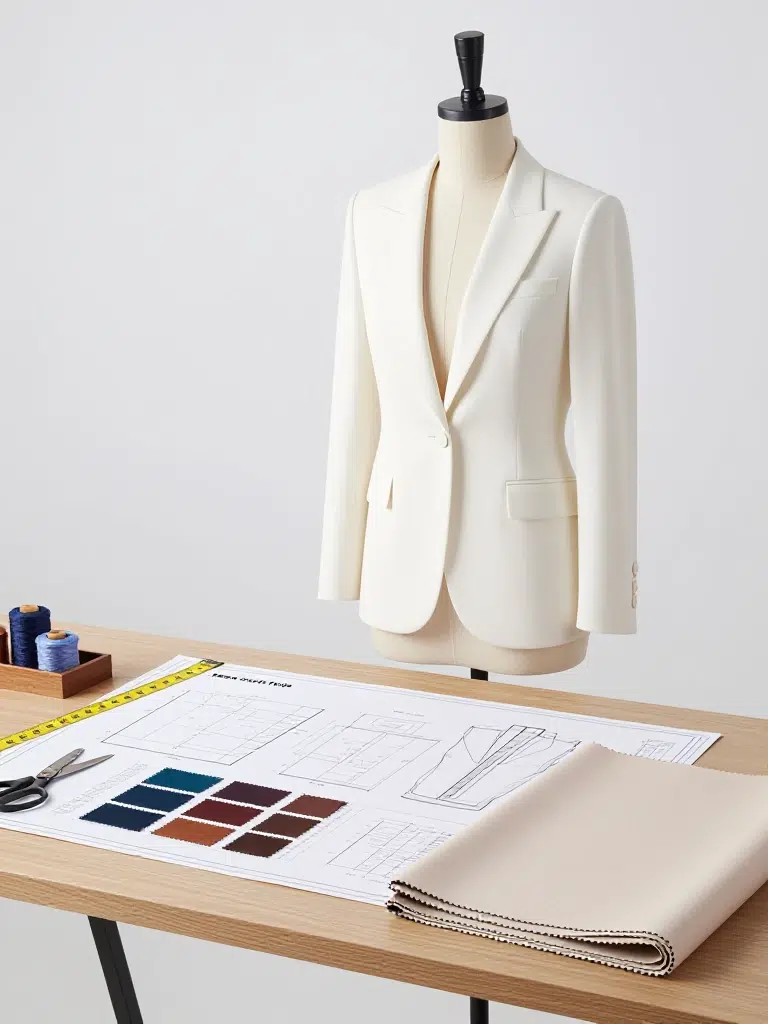
According to The Daily Star and Apparel Views reports published in early September 2026, Bangladesh has overtaken China again in apparel exports to the United States — China’s U.S.-bound garment shipments fell 34.21 percent year over year to $4.55 billion in the January-to-July window, their steepest decline in the period. When the global supplier map is redrawn this fast, every brand that manufactures overseas faces the same quiet question: how do you know a factory can truly deliver your design before you commit real money to bulk production? The answer has always been the sample — the first physical proof that a tech pack can become a garment your customer will actually buy.
At 3Nice Clothing, we manufacture jackets, dresses, denim, knitwear, tops and skirts for emerging fashion labels across the United States, Europe and Australia. Over the years we have watched the sampling phase make or break collections: brands that treat it as a disciplined checkpoint launch on time with their fit and margins intact, while brands that rush it discover expensive surprises months later — fabric substitutions, fit complaints, chargebacks. This guide walks through the 3Nice sampling process from tech pack to sealed sample: what to prepare, what to expect at each round, and the questions to ask before you approve anything.
Why the Sample Stage Matters More Than Ever
Tariff-driven sourcing shifts are pushing brands to qualify new factories or split production across countries — and a new factory is exactly where sampling discipline matters most. A sample is the cheapest insurance policy in fashion. One careful round of sampling costs you time and a little money; one careless approval can cost you a whole season. The sample stage is also where the buyer does most of the learning: how responsive the factory is, how honestly it flags problems, and whether its work matches the quality you expect when the order is a thousand times bigger.
Think of it as a two-way interview. You are testing the factory’s pattern-making, fabric sourcing and communication — and they are testing how prepared you are. The brands that get the best samples are almost always the ones who arrive with the clearest specs.
The Sampling Journey, Round by Round
Most brand owners are surprised to learn that “sample” is not one thing — it is a short series of checkpoints, each with a different job. Here is how the journey typically runs at 3Nice:
- Round 1 — Development sample (the “proto”). The first physical translation of your tech pack. Its job is to check proportions, how the design behaves in real fabric, and whether the construction approach works. Expect the first development sample roughly one to three weeks after your tech pack is approved and fabric is confirmed — fabric and trim availability is the main variable.
- Round 2 — Revised fit or sales sample. Your comments from Round 1 are incorporated. This is the sample that goes on a real person, gets photographed, and represents your style to buyers and retailers.
- Final — Pre-production sample (PP). Sewn with your bulk fabric and trims, this is the closest possible preview of production. Once you sign off on it — the “sealed sample” — the factory matches bulk production against it, piece by piece.
Plan on roughly two to four weeks for the first sample and one to two weeks per revision round. What nobody tells you on the first call: it is the sample calendar, not the bulk calendar, that decides your launch date. Brands that backdate from a market week and squeeze sampling into two weeks are the ones who end up approving fabric they never tested.
What a Great Tech Pack Includes
You do not need a professional spec-sheet format to start — clarity beats polish. But the more complete your pack, the fewer revision rounds you will pay for. A great tech pack covers:
- A flat sketch (technical drawing) with callouts for details like stitching, trims, pockets and openings.
- A size spec — a measurement table for the sizes you plan to sell. Missing measurements invite the factory to guess, and guesses cause the most common sampling complaint: “the fit is not what I imagined.”
- A bill of materials — main fabric plus trims (buttons, zippers, labels), with references or suppliers. If you only have a physical swatch, send it; we can source against it.
- Color standards — Pantone references or physical color chips, and always approve a lab dip before any fabric is cut.
- Fabric expectations — weight, hand feel, fiber content and any special finish, so there is no surprise when the garment arrives.
A tech pack is also the best communication tool you own: when you write a comment on a sample, the factory can trace it back to the exact spec instead of guessing at intent.
How to Evaluate a Sample Like a Pro
When the first sample lands, most people look at it, like it, and approve it. The extra ten minutes of scrutiny below is what separates smooth seasons from painful ones:
- Fit on a real body, not a hanger. Try the sample on a live fit model in the sizes you will sell. Judge the drape in motion, not just pinned on a mannequin.
- Fabric behavior. Compare hand feel and drape against your approved swatch. Does it move the way the design needs? Check how the fabric behaves at the seams and after sitting or wearing.
- Ask for wash and care test results before you approve. Request the shrinkage numbers from the wash test, the color fastness rating, and the pilling grade on the standard 1–5 scale. On knits and denim especially, this is where post-purchase returns are born.
- Details and trims. Buttons and zippers function smoothly, trim colors match the approved standard, seams lie flat, and patterns or stripes line up where they should.
- Document everything. Photograph front, back and side in consistent lighting, and annotate your comments directly on the photos. Specific, visual feedback gets you a better sample in one round instead of three.
One golden rule: never approve a “good enough” sample hoping production will quietly fix it. Bulk production follows the approved sample — every fix is cheaper and faster at the sample stage.
Common Sampling Pitfalls (and How to Avoid Them)
- Skipping the lab dip. Approving color from a screen, not a physical dip, is the classic recipe for a bulk color surprise.
- Vague feedback. “It’s not quite right” sends the factory guessing. One annotated photo per issue, please.
- Changing the design after the PP sample. Every change after sealing resets cost and calendar — finalize details early.
- Ignoring trim lead times. Custom buttons or branded labels can take weeks; source them when you brief the factory, not when bulk is about to start.
- Approving without wash data. On anything that will be washed, the shrinkage and pilling numbers decide whether customers keep or return the garment.
What You’re Really Paying For
Sample charges confuse many first-time brand owners, so here is an honest breakdown — in percentages, not dollars. Fabric and trims typically account for more than half of a sample’s cost, because you are buying small quantities of materials that are usually purchased in bulk. Cutting and sewing labor makes up roughly a quarter. Pattern-making, grading and studio overhead cover the rest. That is why revision rounds and express courier fees are where sample budgets quietly balloon — and why the most cost-effective thing you can do is approve carefully, round by round.
Why Brands Choose 3Nice for Sampling
- An in-house sample room. Patterns, cutting and sewing happen under one roof, so your sample reflects the same team and standards that will produce your bulk order.
- Fabric sourcing support. We help source and test fabrics — including mills that can document the compliance data more retailers now request — before you commit to a yard.
- Honest timelines. We would rather tell you a realistic date up front than chase an impossible one and miss your market week.
- Tracked progress with TradeFlow. Every stage of your sampling and production — from tech pack approval to sealed sample to shipment — is tracked in our TradeFlow system, so you always know where your order stands instead of chasing emails. See how TradeFlow works.
- One point of contact. Clear English communication with a single coordinator from first sketch to bulk delivery.
Start With a Sample, Not a Gamble
Every production order at 3Nice starts with samples we are proud to stand behind. Browse our women’s collection to see the categories we manufacture — jackets, dresses, denim, knitwear, tops and skirts — take a look inside our factory, or contact our team to discuss your tech pack. Tell us your launch date and we will tell you honestly what fits your timeline.
Related Reading: