

Why “Reliable” Is the Word Every Startup Underestimates
According to a September 2026 GlobeNewswire analysis of American-made apparel production, the clothing manufacturers still standing in major hubs like Los Angeles are “more specialized, capable and valuable to growing fashion brands than ever” — precisely because decades of industry decline removed the generalists and left the operators who can actually execute a first collection. In the same week, Bloomberg reported that small businesses in Canada were “fighting for our life” as new tariff measures reshaped their landed costs. Read those two stories together and the lesson for a new label is clear: the strength of your manufacturing partner now matters more than the size of your launch budget.
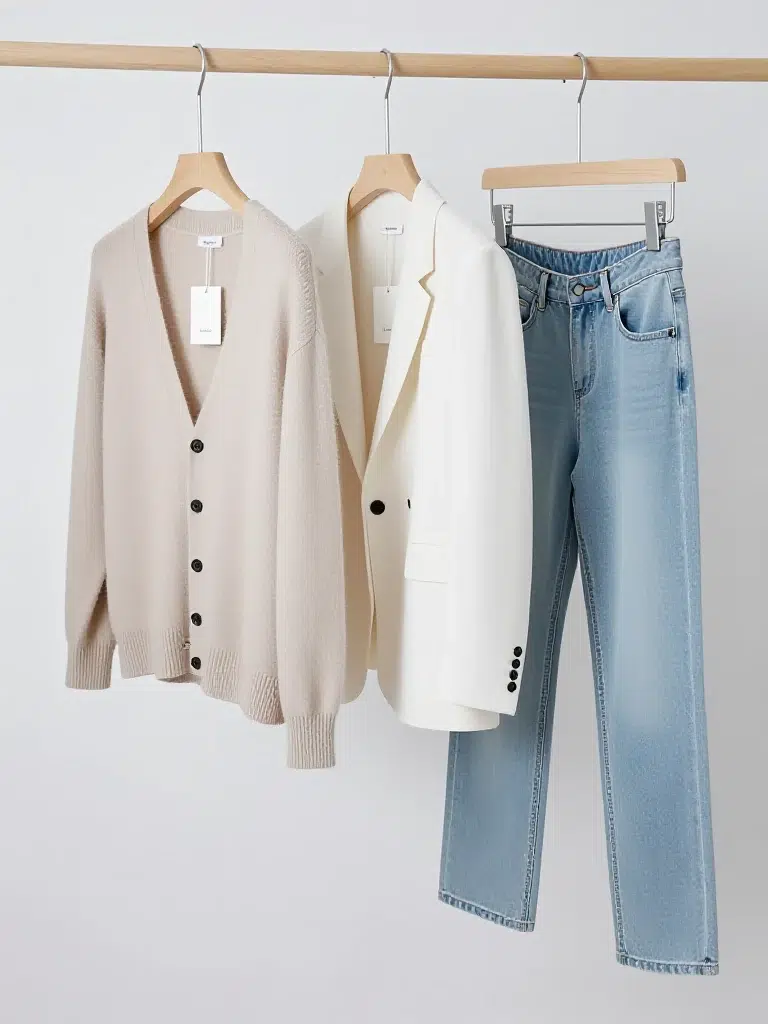
At 3Nice Clothing, we manufacture jackets, dresses, denim, knitwear, tops and skirts for emerging brands across the United States, Europe and Australia. We have also watched plenty of promising labels stall — not because the designs were weak, but because the factory behind them was the wrong fit. Here is the checklist we would hand a founder before they sign anything.
Know Which Type of Partner You Are Actually Talking To
Before price or capability, understand the business model in front of you. The three you will meet most often behave very differently once production starts.
- Direct manufacturers own or directly run the line — cutting, sewing, finishing. You talk to the people making the garment, so changes move fast and accountability is clear.
- Trading companies take your order and place it with a factory they do not own. Useful for one-stop paperwork, riskier when something goes wrong, because your delivery date depends on a third party you never meet.
- Brokers and agents work on commission. They can open doors, but they rarely control quality or delivery, and their incentive is the order value, not your repeat business.
The question that separates them is simple: “Who physically cuts and sews my garment, and can I meet that team?” A partner who answers without hesitating is a partner you can build on.
Seven Questions That Separate a Factory From a Risk
- Can you show me a garment you made that is close to mine? Ask for a physical piece or a short video of it on a table — not a catalog photo.
- What is your capacity at my scale, and what happens when I grow? A factory that only wants large programs will deprioritize you. One that scales with you is worth keeping.
- Who sources the fabric, and can I approve it first? Ask to see the mill, the fiber composition and a color lab dip before any cutting happens.
- What quality tests do you run, and can I see the reports? Three matter most for a first collection: pilling grade on knits, shrinkage after repeated home washing, and color fastness to wash and light. Ask for the actual grades — not a verbal “it’s fine”.
- How do you handle a problem shipment? A reliable partner puts remake and remediation terms in writing before the order, not after the surprise.
- What does communication look like week to week? Photos at cutting, at sewing, at finishing. Silence between deposit and delivery is the most common startup complaint we hear.
- Can I see where my order stands without emailing you? Production transparency is either built into their system or it is not.
Red Flags Founders Tend to Ignore
- A quote that arrives before anyone asks about your fabric, timeline or target quality level.
- No physical sample stage — straight from drawing to bulk.
- Payment requested entirely to a personal account, with no company documentation behind it.
- Vague answers about who owns the pattern after production. Your patterns and your designs should remain yours.
- Timelines quoted in “weeks” without any explanation of what happens if the fabric mill slips.
What a Good Manufacturing Relationship Costs
Most first collections break down in roughly the same proportions, and understanding the split lets you negotiate instead of guess. Across the programs we run, fabric and trims account for about half of the total — usually 45 to 55 percent, and more on a heavy knit or a technical fabric. Cutting, sewing and assembly run about 25 to 30 percent. Sampling and development, including pattern work and revisions, sits around 8 to 12 percent. The remainder, roughly 8 to 10 percent, covers finishing, pressing, packing, inspection and getting the goods to your door.
Two conclusions follow. First, fabric is where the biggest savings — or the biggest quality loss — lives, so lock your fabric before you argue about labor. Second, sampling is a small share of the budget but the largest share of your risk: a few rounds of samples is the cheapest insurance you will ever buy against a bad production run.
Why Brands Choose 3Nice
- Production sized to your first collection. We build launch-scale runs and expand with your reorders, so a first order does not have to be a bet on numbers you cannot sell.
- Fabric development in house. We source, test and lab-dip fabrics so you approve the hand feel and the color before cutting.
- Six core categories under one roof — jackets, dresses, denim, knitwear, tops and skirts — one relationship instead of six suppliers to manage.
- Sampling first, always. Every program starts with a physical sample and a structured round of corrections before bulk.
- Quality you can check. Pilling, shrinkage and color fastness testing with documented results, plus in-line inspection before packing.
- TradeFlow production tracking. Our own platform shows your order moving through artwork, samples, spec confirmation and production, so you are never chasing a status email.
Start With One Question, Not Ten Quotes
Founders often collect a dozen quotes in a week and learn nothing, because quotes from different partners are not comparable. Choose two or three manufacturers who actually make what you make, ask the seven questions above, and judge them on the answers rather than the number at the bottom of the page. Then start small, sample properly, and let the first production run prove the relationship.
Browse our women’s collection to see the categories we produce, take a look at our factory, or contact us with your tech pack and target launch window. If you want to follow an order before it ships, TradeFlow is where it lives.
Related Reading: The 3Nice Sampling Process: From Tech Pack to Sample · Fabric Sourcing at 3Nice Clothing: What Designers Need to Know · How to Source Custom Sweaters Without Getting Burned · 3Nice Custom Jacket Manufacturing: Quality Blazers, Bombers & More